
İçindekiler
Waterproofing and environmental containment systems require materials that can provide reliable protection against water infiltration and leakage. Bentonite membrane is widely used in foundation waterproofing, underground structures, landfills, and containment projects because of its self-sealing properties and low permeability. Its ability to expand when exposed to water makes it a preferred solution in many civil engineering and environmental applications.
Santaş İzolasyon supplies bentonite membrane products designed for waterproofing and containment projects where long-term protection and installation efficiency are important considerations.
What Is Bentonite Membrane?
Bentonite membrane is a geosynthetic clay liner manufactured by encapsulating natural sodium bentonite between geotextile layers. When exposed to water, the bentonite expands and forms a dense barrier that helps prevent water migration. This self-sealing characteristic allows the membrane to maintain waterproofing performance even when minor punctures or ground movement occur.
The material is commonly used as an alternative or complementary solution to conventional waterproofing systems in projects requiring reliable subsurface protection.
Where Is Bentonite Membrane Used?
Bentonite membrane is used in projects where groundwater control, waterproofing, and environmental containment are required. Its ability to create a low-permeability barrier makes it suitable for both structural and environmental applications.
Common applications include:
- Building foundations
- Basement waterproofing
- Underground parking structures
- Tunnel projects
- Landfills
- Mining operations
- Water reservoirs
- Retaining walls
- Environmental containment systems
Many project owners select bentonite membrane because it provides waterproofing protection without requiring complex installation procedures.
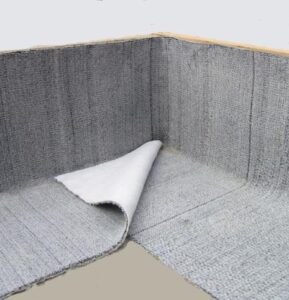
Why Is Bentonite Membrane Preferred for Waterproofing Projects?
Bentonite membrane is preferred because it combines waterproofing performance with self-sealing capability. When water reaches the bentonite layer, the material expands and helps close small gaps that could otherwise allow water penetration. This characteristic supports long-term waterproofing performance in underground structures.
Unlike some waterproofing systems that rely solely on surface protection, bentonite membrane creates an active barrier that reacts to moisture exposure. This makes it particularly suitable for projects exposed to groundwater pressure.
Key advantages include:
- Self-sealing performance
- Low permeability
- Resistance to groundwater penetration
- Fast installation
- Long service life
- Compatibility with concrete structures
Available Bentonite Membrane Types and Specifications
Bentonite membranes are available in different configurations to accommodate varying project requirements. Product selection should be based on site conditions, groundwater exposure, structural design, and containment requirements.
| Application | Common Product Type |
|---|---|
| Foundation waterproofing | Standard GCL |
| Basement structures | Reinforced GCL |
| Landfills | HDPE-backed GCL |
| Mining projects | Reinforced containment systems |
| Reservoir applications | High-performance GCL |
The most suitable specification should be determined according to project conditions rather than product type alone.
Bentonite Membrane vs HDPE Membrane
Bentonite membrane and HDPE membrane are both used for waterproofing and containment applications, but their operating principles differ significantly. Understanding these differences helps identify the most suitable solution for a specific project.
| Feature | Bentonite Membrane | HDPE Membrane |
|---|---|---|
| Waterproofing Method | Swelling clay barrier | Synthetic barrier |
| Self-Sealing Capability | Yes | No |
| Flexibility | High | Moderate |
| Installation Complexity | Moderate | Higher |
| Chemical Resistance | Good | Excellent |
Many projects combine bentonite membrane and HDPE membrane systems to achieve additional containment security in critical applications.
What Should Be Considered Before Bentonite Membrane Installation?
Proper installation conditions play a major role in overall waterproofing performance. The substrate should be prepared before installation to help maintain consistent contact between the membrane and the structure.
The installation surface should be smooth, stable, and free from excessive debris. Gaps, voids, or large protrusions may affect performance and should be addressed before installation begins.
Before installation, it is recommended to evaluate:
- Groundwater conditions
- Surface preparation requirements
- Structural design details
- Drainage systems
- Overlap and sealing requirements
Careful planning helps support long-term waterproofing performance and reduce installation-related issues.
What Factors Affect Bentonite Membrane Performance?
Bentonite membrane performance depends on product quality, installation practices, groundwater conditions, and project design. A properly installed membrane can provide reliable waterproofing protection for many years.
Hydraulic conductivity (the rate at which water can pass through a material) is one of the most important performance indicators. Low hydraulic conductivity helps reduce water migration and improve containment efficiency.
Swell index (a measurement of bentonite expansion when exposed to water) also influences waterproofing effectiveness. Higher swelling capacity generally contributes to stronger sealing performance in suitable conditions.
Needle-punched reinforcement (a manufacturing process that mechanically bonds geotextile layers together) helps improve internal stability and resistance to displacement during installation and operation.
What Influences Bentonite Membrane Prices?
Bentonite membrane prices vary according to product specifications, reinforcement type, project quantity, and site requirements. Different applications require different performance levels, which can influence overall costs.
The main pricing factors include:
- Product type
- Bentonite content
- Reinforcement method
- Roll dimensions
- Project quantity
- Transportation requirements
- Installation conditions
Comparing products based solely on material cost may not provide an accurate assessment of long-term waterproofing performance.
Why Choose Santaş İzolasyon for Bentonite Membrane Solutions?
Selecting the right bentonite membrane requires evaluation of groundwater conditions, project requirements, structural design, and long-term waterproofing expectations. Choosing the correct product helps support reliable performance throughout the service life of the structure.
Santaş İzolasyon supplies bentonite membrane products suitable for foundation waterproofing, environmental containment, underground structures, reservoir applications, and infrastructure projects. Different product configurations are available to support project-specific requirements.
Whether your project involves a basement structure, landfill, tunnel, reservoir, or containment system, Santaş İzolasyon can help identify the most suitable bentonite membrane solution. Contact Santaş İzolasyon for technical support, product information, and a quotation tailored to your project requirements.
Frequently Asked Questions
What is the main purpose of bentonite membrane?
Bentonite membrane is used to prevent water infiltration and create a waterproof barrier in underground and containment applications.
Does bentonite membrane expand when exposed to water?
Yes. Sodium bentonite expands when it comes into contact with water, helping create a dense waterproofing barrier.
Can bentonite membrane be used below groundwater level?
Yes. Bentonite membrane is commonly used in projects exposed to groundwater and hydrostatic pressure.
Is bentonite membrane suitable for foundation waterproofing?
Yes. It is widely used for foundation and basement waterproofing because of its self-sealing properties.
What is the difference between bentonite membrane and HDPE membrane?
Bentonite membrane relies on swelling clay to create a waterproof barrier, while HDPE membrane functions as a synthetic impermeable layer.
How long does bentonite membrane last?
Service life depends on installation quality, environmental conditions, and project design. Properly installed systems can provide long-term waterproofing performance.
Can bentonite membrane repair minor damage automatically?
Yes. The swelling properties of bentonite can help seal small punctures and minor installation defects under suitable conditions.
Is bentonite membrane environmentally safe?
Yes. Bentonite is a naturally occurring clay material that is widely used in environmental containment and waterproofing projects.

