
İçindekiler
Water storage requirements vary between agricultural operations, construction projects, industrial facilities, and emergency response applications. Inflatable water tanks provide a practical solution when rapid deployment, transport flexibility, and efficient use of available space are priorities. Unlike rigid storage systems, they can be delivered to site, installed quickly, and folded for storage when not in use.
Santaş İzolasyon supplies inflatable water tanks designed for temporary and long-term water storage applications. Available in different capacities and material options, these systems support a wide range of operational requirements while reducing installation complexity.
What Are Inflatable Water Tanks?
Inflatable water tanks are flexible storage systems designed to hold potable water, irrigation water, firefighting reserves, rainwater harvesting systems and industrial process water. They allow large volumes of water to be stored without the construction requirements associated with concrete or steel tanks. Their foldable structure makes transportation, storage, and deployment easier in locations where permanent infrastructure is not available.
These tanks are manufactured from durable technical fabrics developed for demanding operating conditions. Many models are produced using TPU (Thermoplastic Polyurethane), a material known for its durability and resistance to abrasion. Depending on the intended application, different capacities, fittings, and material specifications can be selected.
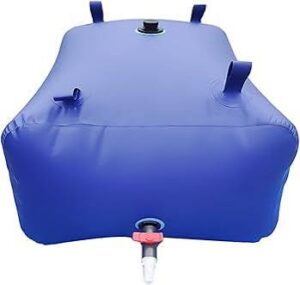
Inflatable Water Tanks
Where Are Inflatable Water Tanks Used?
Inflatable water tanks are used wherever reliable water storage is required without investing in permanent storage infrastructure. They support both temporary and long-term water management needs across multiple industries. Their portability makes them suitable for remote locations where traditional tanks may be difficult to install.
Common applications include:
- Agricultural irrigation systems
- Livestock watering operations
- Construction sites
- Firefighting water reserves
- Emergency response projects
- Municipal water storage
- Mining facilities
- Industrial processing operations
- Rainwater harvesting systems
Many organizations choose inflatable water tanks because they can be transported efficiently and deployed with minimal site preparation.
Why Are Inflatable Water Tanks Preferred?
Inflatable water tanks are preferred because they combine large storage capacity with simple installation and transportation requirements. They require less preparation than many traditional storage systems and can be relocated when operational needs change. Their flexible design also reduces storage space requirements when the tank is empty.
This combination of portability and storage efficiency helps reduce logistical challenges in projects where water access is essential. For many users, the ability to install and relocate a tank without major construction work becomes a practical advantage.
Key benefits include:
- Fast installation
- Reduced transportation costs
- Compact storage when empty
- Easy relocation
- Minimal maintenance requirements
- Adaptability to different project environments
Available Capacities and Custom Manufacturing Options
Inflatable water tanks are manufactured in a wide range of capacities to accommodate different storage requirements. Capacity selection should be based on daily water demand, refill frequency, available installation space, and operational objectives.
| Application | Typical Capacity Range |
|---|---|
| Small agricultural use | 1,000 – 10,000 liters |
| Irrigation projects | 10,000 – 100,000 liters |
| Construction sites | 20,000 – 200,000 liters |
| Emergency water storage | 5,000 – 100,000 liters |
| Industrial facilities | Custom capacities available |
For large-scale projects, custom dimensions and connection layouts can be specified to meet operational requirements and available site conditions.
PVC vs TPU Inflatable Water Tanks
PVC and TPU are the most common materials used in inflatable water tank manufacturing. Both materials provide flexible water storage capabilities, but their performance characteristics differ depending on operating conditions. Selecting the right material helps improve durability, maintenance requirements, and long-term value.
| Feature | PVC Tanks | TPU Tanks |
|---|---|---|
| Initial Cost | Lower | Higher |
| Flexibility | Good | Excellent |
| Abrasion Resistance | Moderate | High |
| UV Resistance | Good | Very High |
| Performance in Demanding Conditions | Suitable | Excellent |
Many buyers focus primarily on storage capacity during procurement. Material selection often has a greater impact on long-term performance, especially in environments exposed to frequent handling, temperature fluctuations, or challenging site conditions.
What Should Be Considered Before Installation?
Proper installation conditions help maximize tank performance and service life. The installation area should be prepared before delivery to ensure stable operation. Ground quality, drainage conditions, and accessibility all contribute to reliable long-term performance.
Inflatable water tanks perform best on level, clean, and properly drained surfaces. Sharp objects, uneven terrain, and standing water can affect durability over time. Installation planning should also include access for filling, inspection, and maintenance activities.
Before installation, it is recommended to evaluate:
- Ground stability
- Drainage conditions
- Water access points
- Available installation space
- Environmental exposure conditions
These factors help reduce unnecessary wear and support consistent operation.
What Affects the Lifespan of an Inflatable Water Tank?
The lifespan of an inflatable water tank depends on material quality, operating conditions, installation practices, and maintenance routines. Tanks installed on suitable surfaces and operated under proper conditions generally provide reliable performance for many years. Environmental exposure and usage frequency also influence long-term durability.
Long-term outdoor performance is influenced by UV stabilization (protection against material degradation caused by sunlight exposure), particularly in regions exposed to intense sunlight. Ground conditions, water quality, and filling frequency should also be considered when evaluating expected service life.
Material tensile strength (the ability to withstand stretching and operational stress) becomes increasingly important in applications involving repeated filling and emptying cycles. Evaluating these factors helps buyers select a product that aligns with long-term operational requirements.
What Influences Inflatable Water Tank Prices?
Inflatable water tank prices vary according to capacity requirements, material selection, and technical specifications. Each project has different storage demands, installation conditions, and operational objectives that influence pricing.
Several factors affect overall cost:
- Storage capacity
- Material type
- Connection fittings
- Custom dimensions
- Transportation requirements
- Project specifications
- Compliance requirements
For commercial and industrial projects, evaluating operational lifespan and maintenance requirements alongside the initial purchase price often provides a more accurate assessment of overall value.
Why Choose Santaş İzolasyon for Inflatable Water Tanks?
Choosing the right water storage solution requires careful evaluation of capacity requirements, operating conditions, material specifications, and project objectives. A properly selected tank supports reliable water storage while helping reduce maintenance and replacement costs over time.
Santaş İzolasyon supplies inflatable water tanks suitable for agricultural, industrial, construction, municipal, and emergency water storage applications. Different capacity options and material configurations are available to support project-specific requirements.
Whether you need temporary water storage for a construction site or a long-term solution for agricultural operations, Santaş İzolasyon can help identify the most suitable inflatable water tank for your application. Contact Santaş İzolasyon for technical guidance, product information, and a quotation tailored to your project requirements.
Inflatable Water Tanks – Frequently Asked Questions
Can inflatable water tanks store drinking water?
Yes. Inflatable water tanks can store drinking water when manufactured using potable-water-approved materials designed for safe water storage applications.
How long do inflatable water tanks last?
The lifespan depends on material quality, installation conditions, environmental exposure, and maintenance practices. Properly maintained tanks can provide reliable performance for many years.
Do inflatable water tanks require a concrete foundation?
No. Most inflatable water tanks only require a level, clean, and properly prepared surface for installation.
Can inflatable water tanks remain outdoors year-round?
Yes. Tanks manufactured with UV-resistant materials are suitable for long-term outdoor use when installed and maintained correctly.
What capacity should be selected for irrigation projects?
The required capacity depends on daily water consumption, irrigation schedules, crop requirements, and refill availability.
Are inflatable water tanks repairable if damaged?
Yes. Minor damage can often be repaired using compatible repair kits and approved patching methods, reducing the need for full replacement.
Which material is better for demanding environmental conditions?
TPU-based inflatable water tanks generally provide higher abrasion resistance, flexibility, and durability in challenging operating environments.

